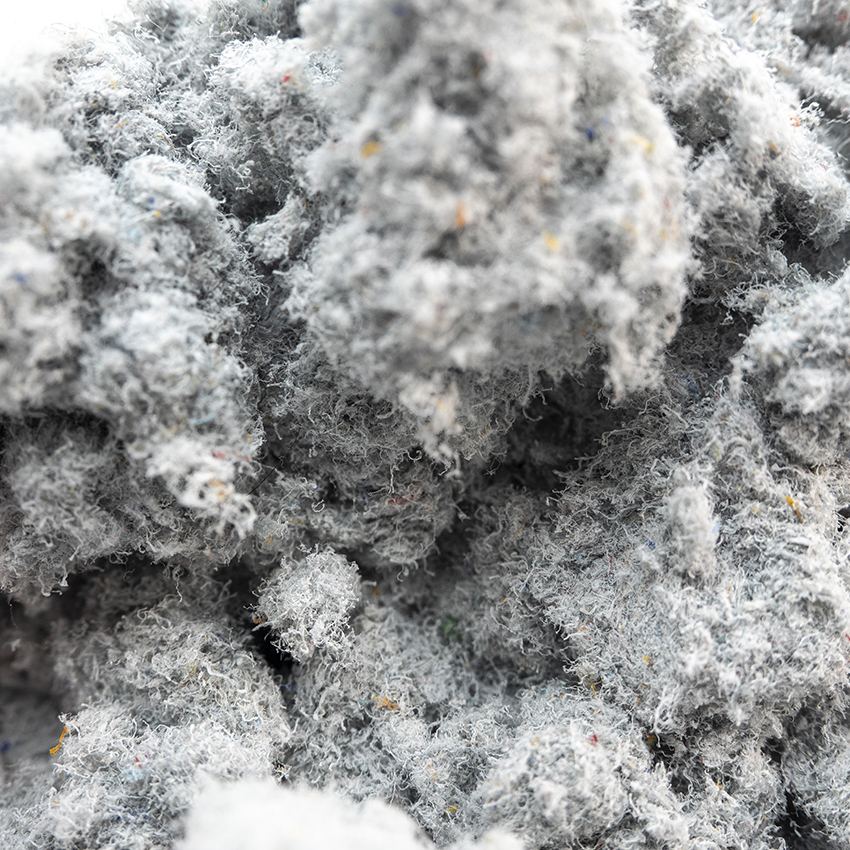
 Pre-consumer leather fibers · before transformation
The Material, Explained
Not a substitute for leather. Not a plastic alternative. A new generation material category, built from fibers the leather industry already produces and has historically set aside.
Pre-consumer leather fibers · before transformation
PELINOVA® is a new generation leather fiber material created through fiber restructuring technology, combining leather fibers with TENCEL™ Lyocell fibers.
Pre-consumer leather fibers are projected onto a TENCEL™ Lyocell textile backing and anchored into it by high-pressure water, creating a layered structure rather than a blend. The surface is finished with a PFAS-free waterborne coating.
A leather fiber material is built from leather fibers rather than a single, intact hide. Every hide a tannery processes yields a usable center, the section that meets the standards of fashion and luxury, and a surrounding volume of pre-consumer leather offcuts that historically had no second life.
PELINOVA® takes those offcuts, reduces them to fiber, and rebuilds them into a certified material through Hydro-Jet Technology: high-pressure water entanglement with TENCEL™ Lyocell fibers, finished with a PFAS-free coating. The result behaves, drapes, and performs as a material in its own right, not as an imitation of the hide it came from.
Brands that work with PELINOVA® credit it directly, on the label. "Made with PELINOVA®" is the line that appears on the product itself, the same way a garment names its fabric.
Three components, combined by physics rather than chemistry:
No chemical binders. No PVC. The fibers are locked together by Hydro-Jet Technology, a high-pressure water entanglement process, rather than adhesives. That is what allows the material to be recertified and audited at each stage rather than treated as a black box.
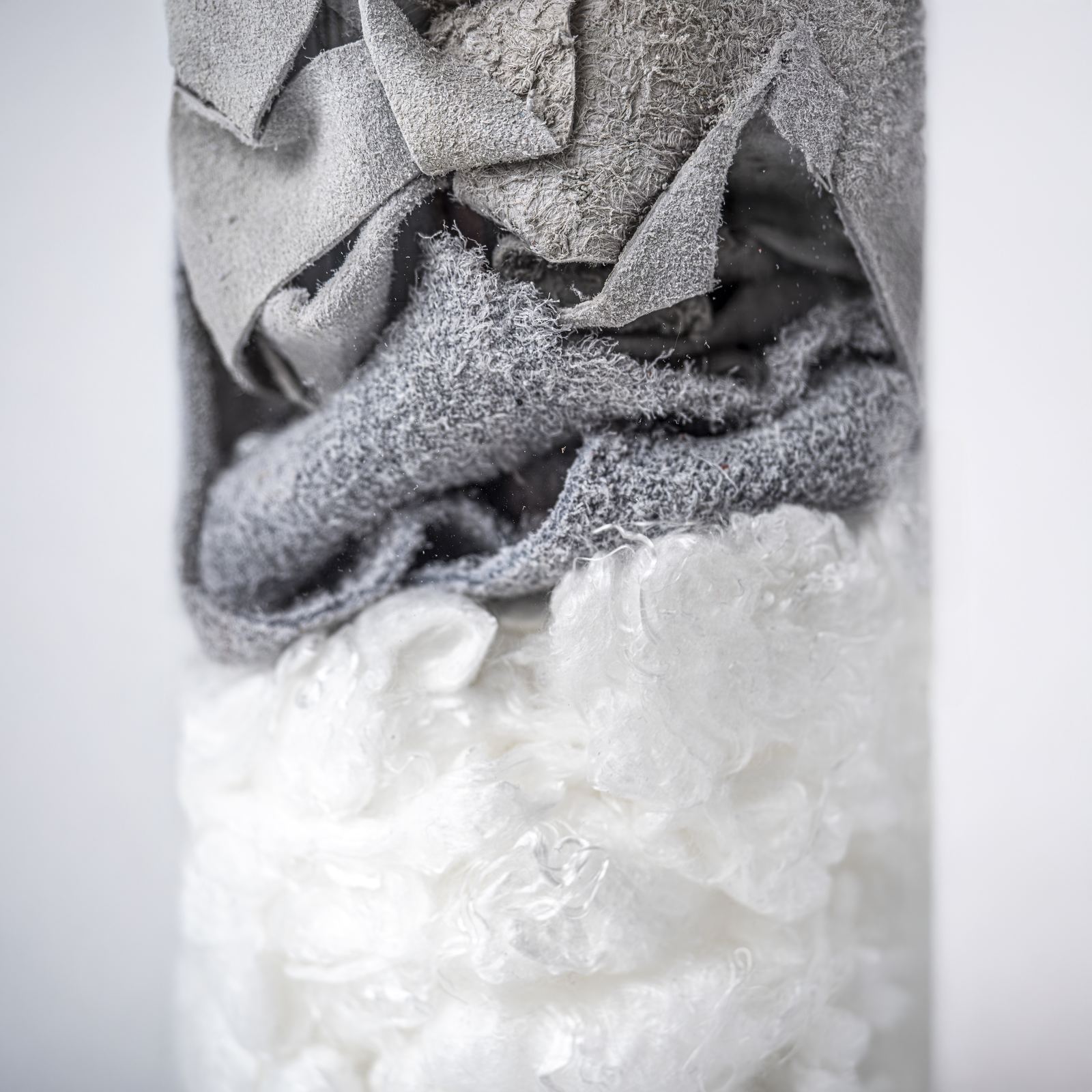 The three layers, before entanglement
PELINOVA® is not positioned against leather, and it is not positioned as an imitation of it. It is a Leather Fiber Material and a New Generation Material, terms chosen deliberately, because the material is evaluated on its own construction, certifications, and performance rather than on how closely it resembles something else.
In practice, that means brands credit PELINOVA® directly on the product itself. The hangtag reads "Made with PELINOVA®," and the material is tested against the same abrasion, delamination, and fastness standards as any material entering a fashion or footwear collection.
GANNI brought PELINOVA® to Paris Fashion Week and onto its product pages. Camper tested it against abrasion, delamination, and colour fastness in footwear, a harder test than fashion alone, and it passed every one. See the full collaborations.
Several families of materials exist today: plant-based materials, mycelium, bacterial cellulose and recycled or bonded leather. PELINOVA® introduces a new category: leather fiber material. Leather fibers are anchored onto a TENCEL™ Lyocell backing, finished with a PFAS-free coating, with no residual microplastics in the structure.
No. PELINOVA® contains real leather fibers, sourced from pre-consumer tannery offcuts. It is neither vegan nor plant-based. Its backing is made of TENCEL™ Lyocell, a cellulosic fiber. This combination gives PELINOVA® the character of leather fibers with the drape of a cellulosic textile.
No. PELINOVA® is made from leather fibers recycled from pre-consumer tannery offcuts that would otherwise go to landfill. The manufacturing process that follows (fiber entanglement, TENCEL™ Lyocell integration, PFAS-free coating) produces a distinct, certified material category, not reprocessed leather.
PFAS-free, ISO 23702-1:2023 verified (CTC 2026), Recyc Leather SAS recertification in progress.
Across facilities in Southern China, within a single-region supply chain in Guangdong. Leather fibers, TENCEL™ Lyocell, and finishing are all sourced and processed in the same region, which keeps the chain traceable and short.
Yes. Current industrial capacity is 1 million square meters per year, supplied in continuous roll format, supporting adoption by global fashion and footwear brands.
A sample tells you more than any specification sheet.